


Understanding Pes Anserine Bursitis: Inner Knee Pain Explained
What is Pes Anserine Bursitis?
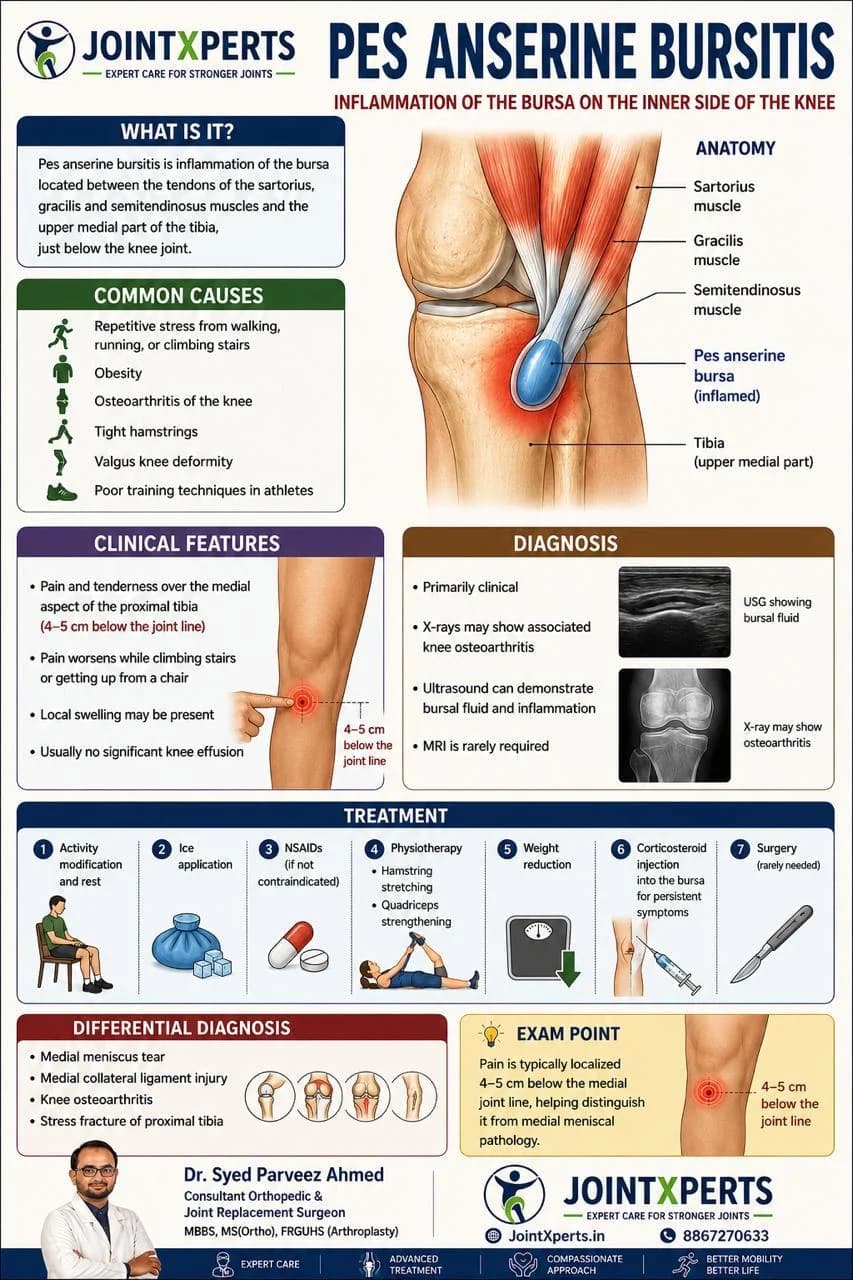
Pes Anserine Bursitis is an inflammation of the bursa located on the inner side of the knee, just below the joint line. A bursa is a small fluid-filled sac that reduces friction between tissues. The pes anserine (Latin for "goose's foot") is the location where three tendons—sartorius, gracilis, and semitendinosus—meet and attach to the shinbone.
Common Causes & Risk Factors
This condition is typically caused by repetitive friction or overuse. It is particularly common in:
- Athletes & Runners: Especially those who increase mileage too quickly or run on sloped surfaces.
- Individuals with Osteoarthritis: Inner knee arthritis often changes gait mechanics, stressing the bursa.
- Tight Muscles: Tightness in the hamstring or calf muscles increases tension on the tendons.
- Obesity: Extra weight places additional mechanical stress on the inner knee.
Recognizing the Symptoms
If you have Pes Anserine Bursitis, you might notice:
- Pain on the inner side of the knee, especially when climbing stairs or rising from a chair.
- Tenderness when pressing on the area about 2-3 inches below the inner knee joint.
- Subtle swelling or a feeling of warmth in the area.
- Pain that develops gradually over weeks rather than from a single traumatic injury.
Rehabilitation & Treatment
Fortunately, most cases respond well to conservative treatments:
Rest and Activity Modification: Avoid activities that aggravate the pain, such as running or jumping, until the inflammation subsides. Apply ice for 15-20 minutes several times a day. Guided physical therapy focusing on stretching the hamstrings and strengthening the quadriceps is highly effective for long-term relief.
Experiencing these symptoms?
Don't let joint pain hold you back. Schedule a consultation with Dr. Ahmed to discuss your treatment options.
Book a Consultation Now